Office lunch can be quick without feeling like an afterthought. Convenient office ready meals in Germany give teams a practical option: packaged meals can be kept on hand, then warmed in a microwave or pan when the lunch break begins.
A meal that fits around meetings, changing schedules, and different work locations makes the day easier. Choose a format that is simple to store and prepare, whether colleagues share an office kitchen or eat between calls at home.
This article explains how ready meals reach teams, what to consider when choosing options for busy workdays, and how microwave or pan preparation fits into a normal lunch routine. You’ll also see how packaged African meals can bring the comforting aromas and bold, familiar flavors of home cooking to a workday, without adding a complicated cooking task to the schedule.
Catering for office, hybrid, and remote teams
German teams can choose delivered packaged meals, workplace canteens, meal kits, or office vending machines. The right format depends on where colleagues work, what storage and preparation options they have, and when they take lunch.
Ready Meals Delivered to Offices
Ready meals can include meat, fish, or vegetable-based dishes, plus frozen meals, filled pasta, canned pasta meals, meal kits, and instant noodles. Before ordering, check where deliveries can be received and stored, and whether colleagues can heat meals in a microwave or prepare them in a pan.
Office Meal Services in Germany
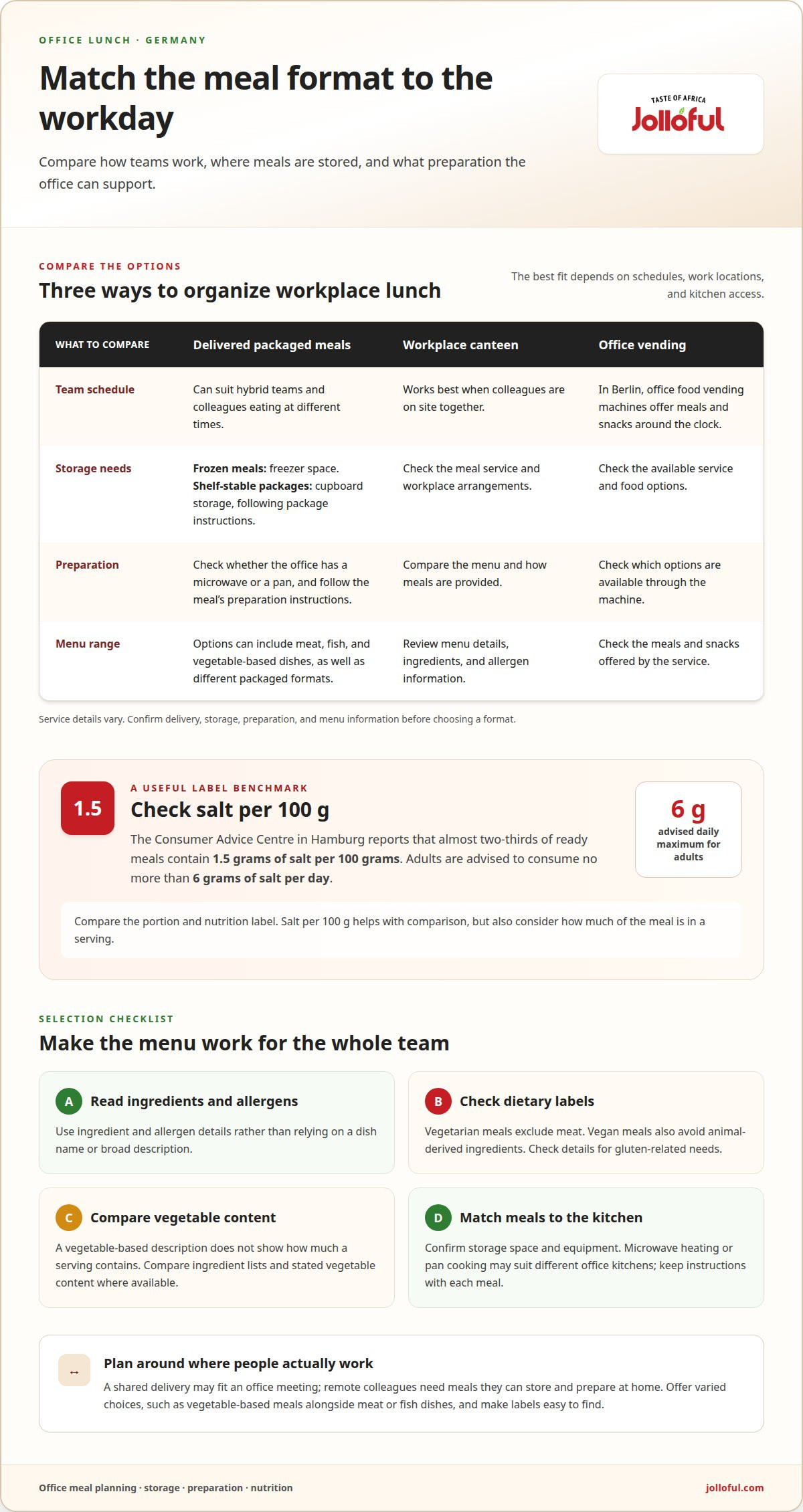
Office meal options in Germany include caterers, workplace canteens, vending machines, and packaged meals ordered for delivery. In Berlin, office food vending machines offer meals and snacks around the clock. For hybrid teams, packaged meals can suit different eating times, while a canteen works best when colleagues are on site together. The service format shapes how employees access lunch.
Meal vouchers and employer-provided lunches can have tax implications in Germany. The treatment depends on the benefit arrangement, so employers should distinguish voucher schemes from meals provided directly.
For hybrid teams, plan around where people actually work rather than assuming everyone eats together. A shared delivery may suit an office meeting, while remote colleagues need meals they can store and prepare at home. Frozen meals need freezer space; shelf-stable packages can be kept in a cupboard.
Preferences also shape a useful menu. Ask which colleagues prefer mild seasoning, plant-based meals, or familiar comfort food, then choose a varied selection. For example, a team could offer vegetable-based meals alongside meat or fish dishes. Clear labels help people choose quickly, especially when several meals arrive together.
Germany produced 1.7 million tonnes of ready meals in 2024, 25.6 percent more than in 2019. That figure describes national production, not office meal demand. The German ready-to-eat market includes foods eaten as-is or after minimal preparation, often heating. Its retail market definition excludes soups and out-of-home consumption, so office catering and retail ready meals are not identical categories.
Before choosing a meal service, map the team’s work locations, storage and preparation options, and food preferences. A small office with a microwave may suit individually packaged meals, while a team without kitchen access needs options requiring minimal preparation.
Nutrition and vegetable content
In Germany, workplace canteens, caterers, vending services, and packaged-meal providers can offer vegetarian, vegan, and allergen-aware choices. Compare menu details, ingredient and allergen information, delivery format, and preparation instructions before selecting meals for a team.
Start with the ingredient list and nutrition information, not the front-of-pack description. Almost two-thirds of ready meals contain 1.5 grams of salt per 100 grams, according to the Consumer Advice Centre in Hamburg. Adults are advised to consume no more than 6 grams of salt per day. Comparing portions and labels helps employees understand how a meal fits into their day.
Check vegetable content carefully. A vegetable-based meal may feature vegetables as its main component, but that alone does not show how much a serving contains. Compare ingredient lists and stated vegetable content where available. Frozen foods can also include vegetables, so freezing alone says little about a meal’s nutritional profile.
Dietary preferences call for clear menu information. Vegetarian meals exclude meat, while vegan meals also avoid animal-derived ingredients. For gluten-related needs, check ingredient and allergen details rather than relying on a dish name. Specific ingredient information is more useful than a broad description such as “plant-based.”
Delivery and storage can affect how a team uses its meal choices. Frozen meals need freezer space, while shelf-stable packages can be stored at room temperature according to their packaging instructions. At lunchtime, microwave heating or pan cooking may suit different office kitchens. Keep preparation directions with each meal so colleagues can follow the intended method.
Germany’s ready-meal market reflects interest in plant-based and organic options, alongside global flavors. For an office menu, offer vegetable-based choices alongside familiar dishes, then rotate selections to learn what employees enjoy. A meal with beans and vegetables, for example, can bring hearty texture and warm seasoning to a lunch break.
Keep nutrition checks practical: review ingredients, compare salt information, identify vegetarian or vegan choices, and note allergen details. Then match each meal to the available storage and preparation equipment. This gives a diverse team useful choices without assuming everyone follows the same diet.
For teams curious about African flavors, African meal options can add a distinct, satisfying choice to the lunch mix. Consider how spice levels and ingredients fit the team’s preferences, alongside the practical details of storage and preparation.
Use these categories to broaden the selection. Statista's Germany market analysis points to interest in plant-based and organic ready-to-eat meals and global flavors. Rotate suitable dishes and invite colleagues to share preferences, rather than assuming one style suits everyone.
Convenience for office meals and busy days
In Germany, people aged 10 and over spent an average of 41 minutes per day preparing food by 2022. For office lunch, prepared dishes can shift cooking out of the workday and leave more time for a short break.
Ready-meal costs in Germany depend on the dish, portion, packaging, delivery arrangement, and order size. A single packaged meal and a recurring workplace delivery involve different cost factors, so there is no single price for every office order.
Convenience starts before lunch. Choose meals that fit the team’s routine and set a clear place for packages to arrive. Keep the process simple: receive the delivery, store each meal as directed, and make preparation instructions easy to find.
Packaging shapes how smoothly that process works. Individually packed meals are easy to assign to colleagues, while larger formats may suit a shared kitchen. Check whether the office has space for the packaging and the equipment needed to heat or prepare its contents.
Variety matters when team schedules differ. One colleague may eat between calls, while another takes lunch after a meeting. A selection of different dishes lets employees choose a meal that fits their timing, without requiring everyone to sit down together.
For example, an office can set aside meals for days with back-to-back meetings and keep other options for planned team lunches. A remote colleague can follow the same approach at home. The right choice depends on storage space, preparation method, and when each person expects to eat.
For busy days, compare preparation directions before choosing a meal. A microwave can make heating straightforward in a shared kitchen, while a pan requires cooking space and time. Clear instructions help colleagues prepare meals consistently, even with a short lunch break.
To understand the total cost, consider the arrangement, not just the dish. Menu choice, portion format, packaging, delivery frequency, and meal quantity all affect the setup. A team ordering for one office day has different needs from one planning repeated deliveries.
Start by mapping the week’s work pattern. Note which days bring people together, where meals will be stored, and what preparation equipment is available. Then choose dishes and packaging that suit those conditions. This keeps office lunches organized without adding a complicated cooking task.
Daily food tasks also take time beyond cooking itself. Girls and women in Germany spent an average of 53 minutes per day cooking, baking, laying the table and washing up in 2022, while boys and men in Germany spent an average of 29 minutes per day cooking, baking, laying the table and washing up in 2022. For teams that need another option alongside planned meals, food vending machines offer meals and snacks in offices in Berlin around the clock, or 24/7. They can provide access outside a planned lunch break, while teams consider where machines fit into the workplace routine and how their selection complements prepared meals.
What ready meals can be delivered to German offices?
German office deliveries can include prepared food, from frozen meals to canned dishes. The right choice depends on storage, available equipment, lunch timing, and colleagues’ preferences.
The German ready-to-eat meals market includes meat, fish, and vegetable-based meals, as well as frozen meals, filled pasta, canned pasta meals, meal kits, and instant noodles. Each format has different storage and preparation needs, so match it to the office kitchen.
Frozen meals need suitable freezer space. Canned meals can be stored in a cupboard, while meal kits may require more preparation than ready-to-heat dishes. For filled pasta, colleagues should follow the package directions.
Consider the team’s lunch routine, too. Individually prepared meals can suit staggered breaks, while a shared delivery can bring colleagues together for lunch. Clear packaging makes it easier to identify each dish and its instructions.
Germany’s market definition covers foods eaten as-is or after minimal preparation, often heating. It excludes soups and out-of-home consumption, distinguishing retail-ready meals from canteen or catered lunches.
Use a short selection process for an office order:
- Check storage: Match frozen meals to freezer capacity and cupboard-stored options to available shelf space.
- Review preparation: Choose meals that fit the office’s microwave, pan, or other available equipment.
- Plan portions: Decide whether employees need separate dishes or a meal kit for shared preparation.
- Compare meal types: Balance meat, fish, and vegetable-based options with pasta meals or instant noodles.
- Read package directions: Share the stated storage and heating steps with colleagues before lunch.
For offices with limited kitchen equipment, meals that need little preparation may be a better fit. Teams with freezer access can consider frozen foods, while remote colleagues can store meals at home. In each case, check that the delivery format, packaging, and instructions suit the setup.
Filled pasta may suit a quick lunch, while a meal kit can make a shared cooking break more hands-on. Choose the format that fits the team’s storage, equipment, and lunch routine.
Which office-ready meal services operate in Germany?
In Germany, office meal options include vending machines, packaged ready meals, meal kits, and workplace food services. They suit different lunch routines: vending machines provide food on site, while packaged meals can be stored and prepared later. The right choice depends on where employees work and what equipment they can use.
Berlin offices can use food vending machines that offer meals and snacks around the clock. This helps employees with varied schedules access food beyond a shared lunch break. Selection depends on what each machine is stocked with.
Packaged meals give office teams more choice in when they eat. Germany’s ready-to-eat market includes meals based on meat, fish, or vegetables, as well as frozen meals, filled pasta, canned pasta meals, meal kits, and instant noodles. Storage and preparation vary: frozen meals need freezer space, while meal kits require preparation rather than simply heating a finished dish.
Retail-ready meals and workplace food services are not identical. The ready-to-eat market covers prepared foods eaten as-is or after minimal preparation, often heating. Its market definition focuses on B2C retail sales through online and offline channels for home consumption, and excludes soups and out-of-home consumption. This distinction helps teams identify which formats fit their needs.
Compare service formats by their role in the workday:
- Office vending: Meals and snacks are available on site, including around-the-clock vending in Berlin.
- Packaged ready meals: Individual dishes can be stored and heated when an employee takes lunch.
- Frozen meals: These suit workplaces with freezer capacity and suitable heating equipment.
- Meal kits: These require preparation, so they fit a planned cooking break better than a very short pause.
- Instant noodles or canned pasta: These are distinct ready-meal formats with their own package directions.
Hybrid teams can combine formats to suit different work locations. Colleagues at a Berlin office might use vending machines, while remote workers keep packaged meals at home. Teams can plan a delivery for a meeting, and employees working late can choose food on site. Location and timing shape the most useful arrangement.
To choose, map where meals will be eaten, then consider access, storage, and preparation. Vending machines provide on-site access, packaged meals allow flexible timing, and meal kits add a cooking step. These differences help teams match lunch options to their work patterns.
Jolloful
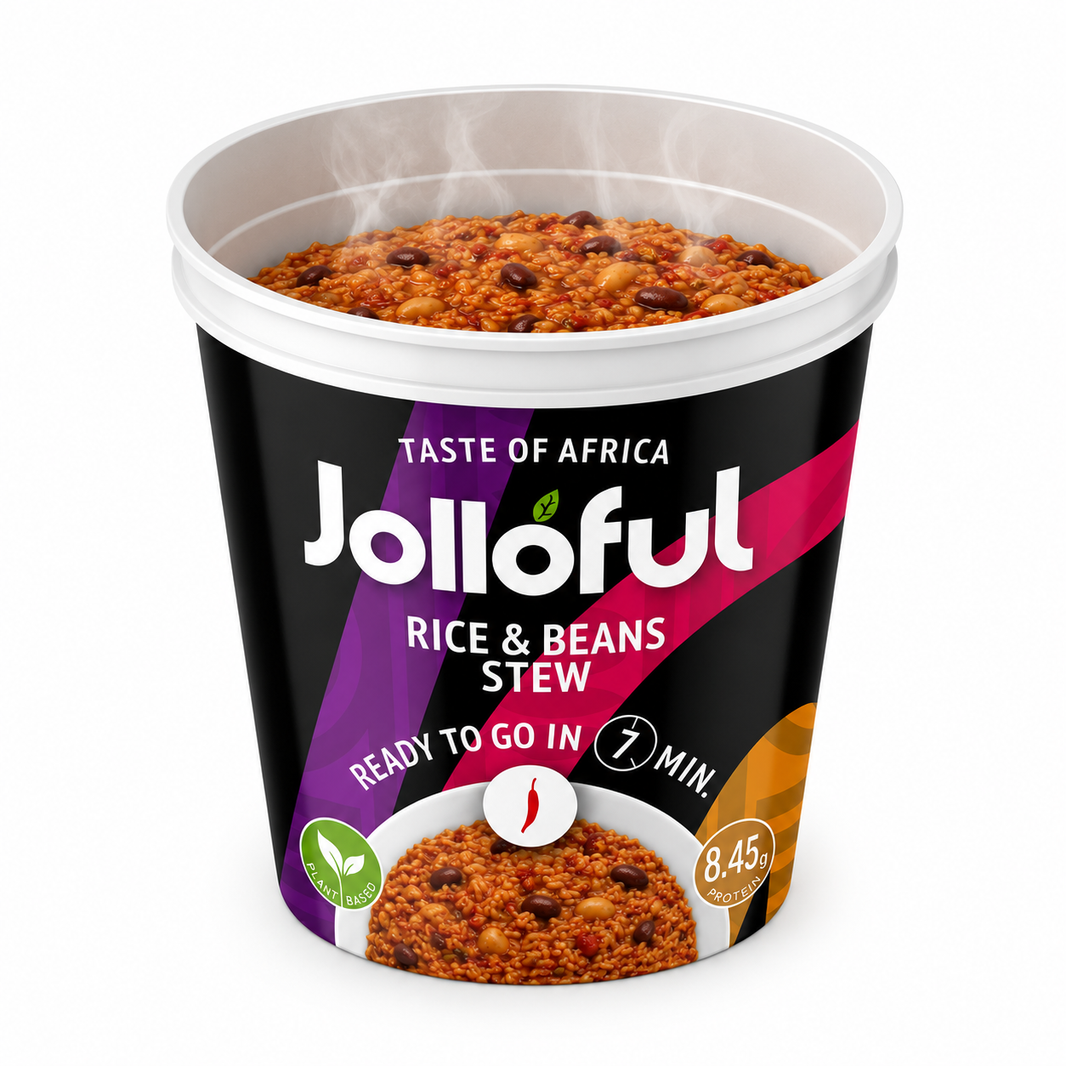
Jolloful brings packaged African meals into the conversation when your team wants a convenient lunch with familiar, hearty flavors. The meals are prepared by adding hot water and stirring, offering a practical option when a full cooking break doesn’t fit.
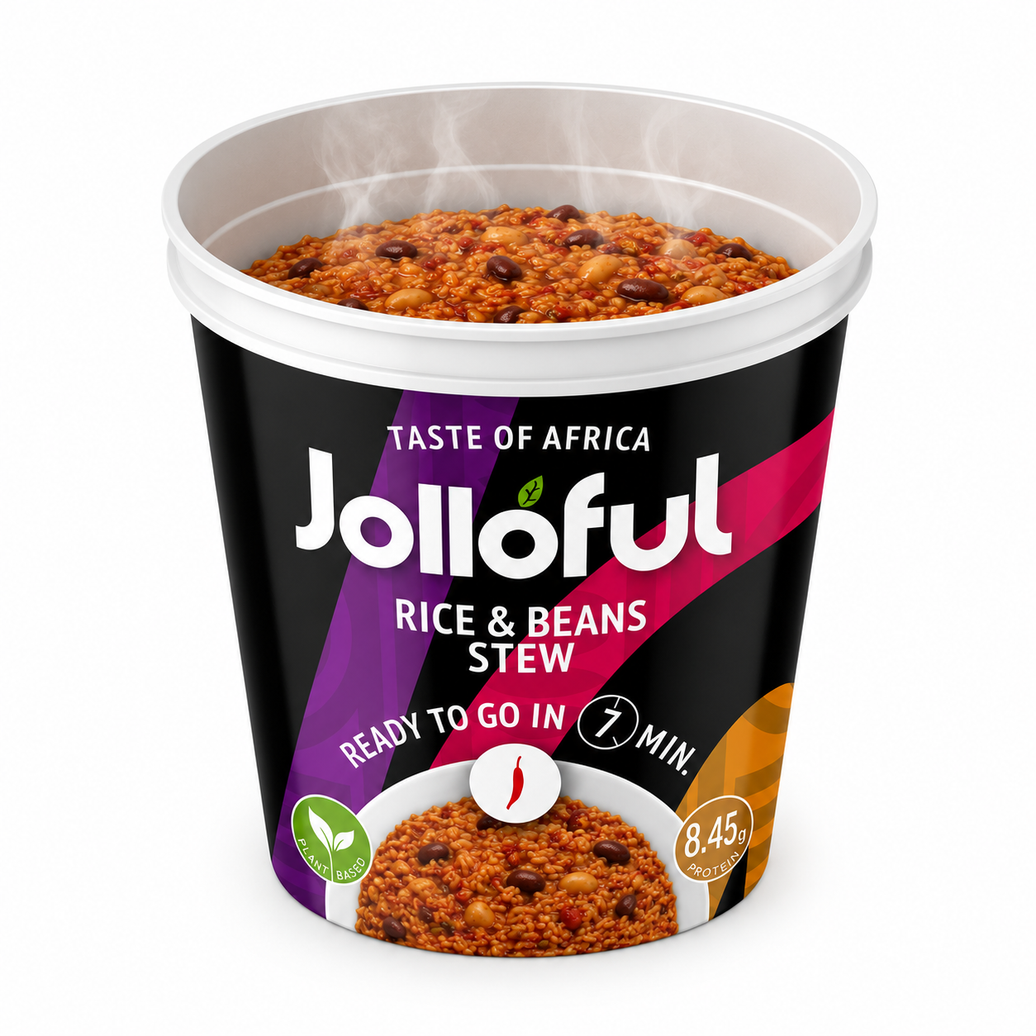
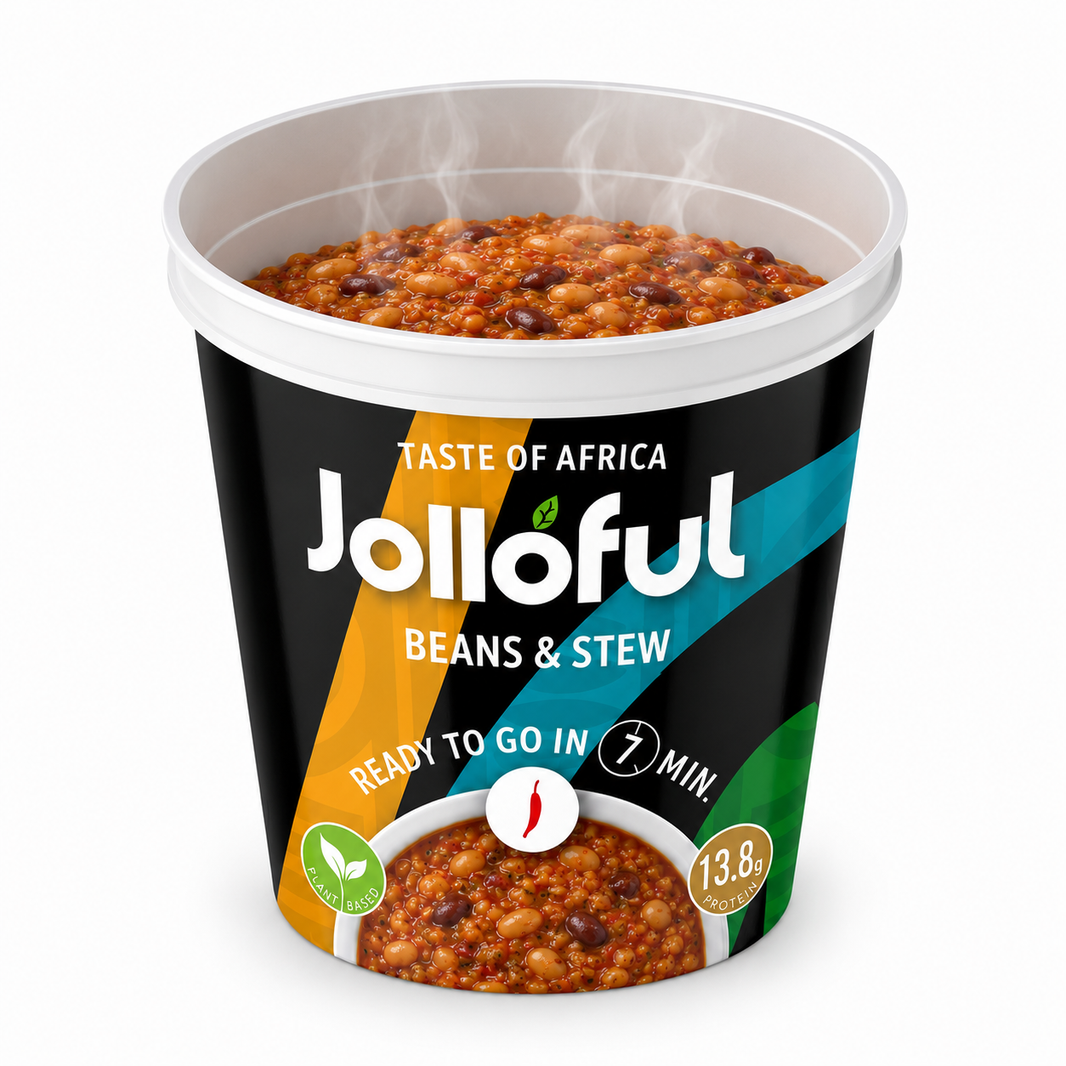
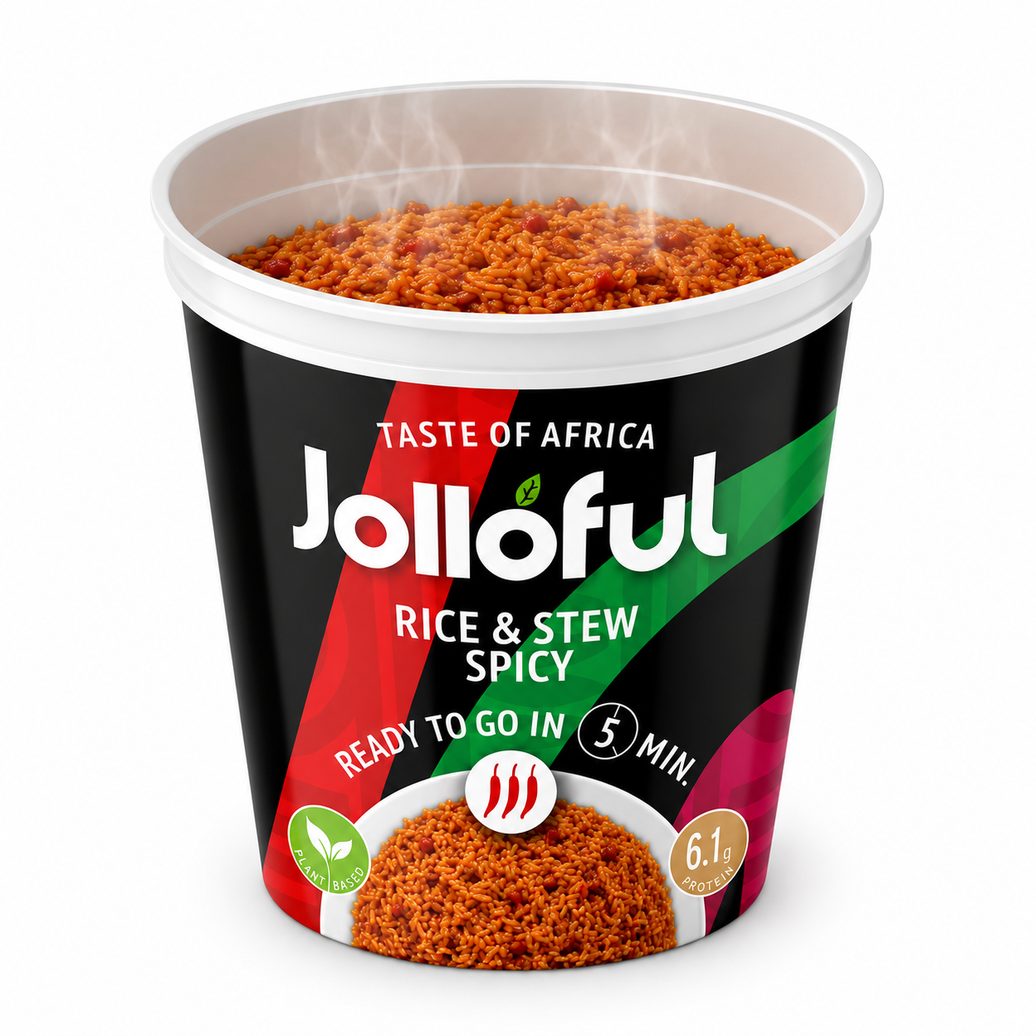
The range includes White Rice and stew (Mild), White Rice, beans and stew, Beans and stew, and White Rice and Stew (Spicy). Teams can choose a mild meal, a spicy option, or a rice and beans combination to suit different tastes.
For an office considering packaged meals, match the format to its storage and lunch routine. Jolloful offers teams a West African food option beyond familiar ready-meal flavors, with recipes rooted in West African cooking.
Contact Jolloful to discuss your team’s meal needs.
Make the next team lunch count
For teams looking for convenient office-ready meals in Germany, make lunch part of the working rhythm, not another task to manage. Choose a day when colleagues overlap, set aside time to eat, and make space for a meal that feels different from the usual desk-side routine.
A shared lunch can also offer a glimpse of African food culture. Familiar ingredients and warming spices bring a fresh feel to the office, while everyone enjoys the meal at their own pace. Start with the team’s practical needs, then let curiosity shape what comes next.
Jolloful brings packaged West African-inspired meals to the workday, with options for varied tastes and routines. Explore the selection and find meals to suit your team’s lunch plans.
A good office lunch can be simple, satisfying, and worth looking forward to. Make room for flavor, connection, and a more inviting break.
Frequently Asked Questions
How are the meals delivered?
Jolloful’s packaged meals are shipped to the delivery address provided with the order. In Germany, delivery typically takes 1-3 working days. The meals are shelf-stable, so they don’t require chilled delivery. To prepare them, add hot water and stir. This gives office teams a practical option for keeping meals in a cupboard and preparing lunch without relying on a microwave or pan.
What ready meals in Germany can be heated in a microwave?
Follow each meal’s package directions, since preparation methods vary by product. Jolloful meals are prepared by adding hot water and stirring, not by heating them in a microwave. They’re ready in 5-7 minutes using that method. This can suit an office kitchen without a microwave, as long as employees have access to hot water and follow the product instructions.
How do office meal delivery subscriptions and minimum orders work in Germany?
Subscription terms and minimum order rules depend on the service and product format. Jolloful subscriptions are available for its meal packs, with delivery every 2 weeks or every month. They renew automatically, but can be skipped or cancelled anytime. This differs from ordering lunch for a specific office day: a pack-based subscription suits planned pantry stock, while a one-time order avoids a recurring schedule.
How do German ready-meal brands compare on ingredients, nutrition, and portion size?
Compare each product’s ingredient list, nutrition panel, serving information, and allergen details. Jolloful meals are 100% plant-based, high in dietary fiber, low in sodium, and made without artificial colour or added preservatives. Ingredients include Basmati rice, tomatoes, beans, peppers, and spices. Buckwheat is present in “White Rice & Beans Stew” and “Beans & Stew”, so review that allergen information when choosing meals.


Leave a comment