
A desk lunch can be quick without feeling like an afterthought. The best quick desk lunch ready meals are easy to carry, simple to eat at your workspace, and satisfying enough to see you through the afternoon.
Choose lunch to suit your workday: cold food works for a short break without kitchen access, while a meal you can heat offers a comforting pause if there’s a microwave nearby. A packed lunch gives you more control over ingredients and portions, but takes a little planning.
This guide explains what makes a meal desk-friendly, from balancing protein, fibre-rich carbohydrates, and healthy fats to choosing between cold lunches, reheatable meals, and packed food. You’ll find practical ideas for preparing lunch ahead, too. Familiar rice and beans, crisp salads, and easy wraps can all bring satisfying flavor to a busy workday.
1. Qualities of desk-friendly meals
A desk-friendly meal fits your break, workspace, and appetite. A sealed rice bowl, chickpea salad, or chicken wrap travels neatly and is easy to eat with simple cutlery. Choose food that tastes good at the temperature you’ll eat it, without messy sauces or several separate containers.
For protein, calories, and balanced nutrition, compare the nutrition label per portion, not just per 100 grams. Look for protein, fibre-rich carbohydrates, and healthy fats together; a meal with beans, whole grains, and avocado offers a different balance from a plain pasta dish. Calorie needs vary, so the label helps you compare portions without assuming one figure suits everyone.
In Germany, chilled ready meals are commonly found in supermarket refrigerated sections, while sealed, shelf-stable meals are usually with ambient foods. Grocery delivery services may group options under prepared meals, lunch, or pantry staples. Browse these categories for grain bowls, bean dishes, or salads, and check each package’s storage instructions.
For a small office fridge, choose compact, sealed portions such as a single salad bowl or a tightly packed wrap. Shelf-stable ready meals can save fridge space before opening if the packaging says they can be stored at room temperature. Follow the storage directions and date on each pack instead of judging by appearance.
A satisfying lunch pairs protein with fibre and a source of healthy fat. Beans with rice, chicken with roasted vegetables, or lentils with olive oil are practical examples. Protein can slow digestion and support steadier energy, while fibre helps digestion and fullness. Healthy fats add satiety and support brain health.
Texture matters at a desk, too. Keep crunchy vegetables such as cucumber or carrots separate from dressing until lunch to help a salad stay crisp. Choose a fork-friendly bowl over food that drips easily, especially if your workspace has a keyboard or shared documents nearby.
Flavor should still feel generous. A mild bean bowl with herbs, a spicy chicken wrap, or roasted vegetables with a tangy dressing can bring variety without relying on extra snacks. For a Nigerian-inspired lunch, rice and beans with a well-packed stew portion offer familiar, warming flavor when reheated.
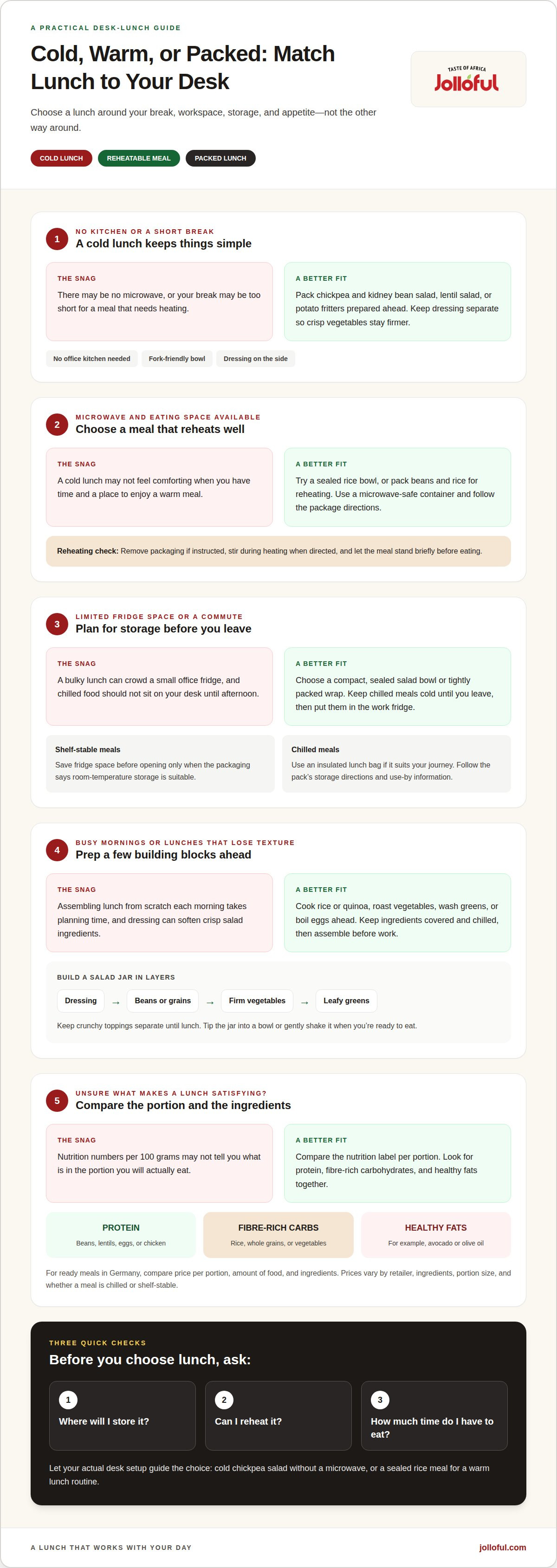
Before choosing among quick desk lunch ready meals, consider three things: where you’ll store the food, whether you can reheat it, and how much time you have to eat. A cold chickpea salad suits a break without a microwave; a sealed rice meal works for a warm lunch routine. Match the meal to your actual desk setup.
2. Cold lunches and reheatable meals
Cold and warm lunches suit different workdays. A chickpea and kidney bean salad needs no office kitchen, while a sealed rice bowl can make for a warmer, more comforting break. Choose a meal that tastes good at the temperature you can manage.
For a cold lunch, try bean salad with chopped vegetables, lentil salad, or potato fritters prepared ahead. Chickpea and kidney bean salad can be made the night before, giving the flavors time to develop. Pack dressing separately to keep crisp vegetables from softening before lunch.
A warm meal works well when your workplace has a microwave and a little space to eat. Pack a reheatable dish in a microwave-safe container, then follow its package directions. Stir food during reheating when instructed, so heat reaches the centre as well as the edges.
Ready-meal prices in Germany vary by retailer, ingredients, portion size, and whether the meal is chilled or shelf-stable. Compare the price per portion on the shelf label, along with the amount of food and the ingredients, rather than judging by packaging alone.
Vegetarian lunch ideas include lentil salad, chickpeas with vegetables, or potato fritters with a protein-rich yogurt dip. For vegan meals, look for bean, lentil, or vegetable options without animal-based ingredients. For gluten-free choices, check the package label and ingredient list, including sauces and seasonings.
Plan storage before your commute. Keep chilled meals refrigerated until you leave, and use an insulated lunch bag if it suits your journey. At work, put the meal in the fridge rather than leaving it on your desk until the afternoon. Follow the package’s storage directions and use-by information.
Reheat food only in containers marked for microwave use, and remove any packaging the instructions say to discard. Follow the label, stir if directed, and let the meal stand briefly before eating. If your office has no kitchen, choose food intended to be eaten cold.
For meal prep, cook lentils or chickpeas ahead and portion them with chopped vegetables. A cold salad can be ready to grab, while cooked rice or vegetables can be packed separately for reheating. Keep ingredients covered and chilled, and pack crunchy toppings separately.
For a filling afternoon lunch, pair beans or lentils with vegetables and a source of protein. A chilled salad suits a short break; a warm meal may feel more restorative after a long morning. Browse ready-to-eat meal choices for another practical option when planning desk lunches.
3. Packed lunches
Healthier alternatives to highly processed ready meals include homemade grain bowls, wraps, and bean salads. Build them from familiar ingredients such as cooked rice, quinoa, vegetables, eggs, chickpeas, or lentils. These choices make it easier to shape the portion and flavor around your workday.
Prepare a few building blocks after dinner or during weekend cooking. Cook rice or quinoa, roast vegetables, wash salad greens, and boil eggs. Store each ingredient covered in the fridge, then assemble lunch before work. This approach gives you mix-and-match options without cooking a full meal each morning.
Use simple combinations to keep packed lunches varied:
- Fill a whole-grain wrap with hummus, vegetables, and tofu or shredded chicken.
- Combine chickpeas, chopped vegetables, olive oil, lemon juice, and feta for a no-cook bowl.
- Pair cooked rice with roasted vegetables and a boiled egg for a filling lunch.
- Turn grilled vegetables into a wrap, or add them to leftover grains.
For a salad jar, put dressing at the bottom, followed by beans or grains, firm vegetables, and leafy greens on top. This keeps delicate leaves away from the dressing during your commute. At lunch, tip the contents into a bowl or gently shake the sealed jar.
Containers help protect texture and prevent spills. Use a leak-proof box for grain bowls, and keep crunchy toppings separate until you eat. A divided lunch box can hold vegetables beside the main portion. Glass containers also resist staining and absorbing odors compared with plastic ones.
Build variety through ingredients rather than extra cooking. Cook quinoa once, then serve it with roasted vegetables one day and chickpeas another. Use cooked rice as a base for a vegetable bowl or serve it alongside beans and greens. Whole-grain bread, yogurt, nuts, seeds, and fresh fruit also work well in a packed-lunch routine.
For quick assembly, prepare only the parts that take time. Washed salad greens, boiled eggs, cooked grains, and roasted vegetables can each be a starting point for lunch. Add a protein source and flavorful dressing before packing. Keep the dressing in a small sealed pot so the leaves stay crisp until your break.
A packed lunch doesn’t need an elaborate recipe. A wrap with hummus and vegetables, or rice with beans and greens, can make a satisfying meal with little effort in the morning. Choose ingredients you enjoy, then vary the herbs, sauces, and vegetables to keep weekday lunches interesting.
Make lunch easier by batch-cooking, refrigerating prepared food, and keeping it ready to take to work. Combine protein, vegetables, whole grains, and healthy fats for a balanced meal. Cooking quinoa once and using it throughout the week can simplify assembly. Keep useful ingredients visible so they’re easy to combine when packing.
Prepare boiled eggs, cooked quinoa or rice, roasted vegetables, and washed salad greens ahead. Use grilled vegetables in wraps, rice as the base for a vegetable bowl, and roasted chicken in salads. Keep whole-grain bread or wraps, yogurt or curd, nuts and seeds, fresh fruit and vegetables, and cooked grains on hand for quick assembly.
4. What are the best ready meals for a quick desk lunch in Germany?
The best choice depends on your break, storage space, and access to a kitchen. In Germany, compare chilled meals, shelf-stable packs, and ready-to-eat salads by ingredients, portion size, and serving temperature. A practical lunch should fit your routine, not just look convenient on the shelf.
For a warm, filling break: choose a rice-and-bean meal or a grain bowl with vegetables. Beans add protein and fibre, while rice or another grain makes the meal substantial. This style suits an office with a microwave and somewhere to sit away from your desk.
For a microwave-free office: choose lentil or chickpea salad, a vegetable wrap, or a meal intended to be eaten cold. These options avoid queues for shared kitchen equipment. Pack dressing separately to help leafy ingredients stay crisp until lunchtime.
For limited fridge space: consider sealed, shelf-stable meals that the packaging says can be stored at room temperature before opening. Their compact format can simplify storage, but check the package directions and how the meal is served. Chilled meals still need suitable refrigeration.
For vegetarian lunches: look for meals built around beans, lentils, chickpeas, or vegetables. For a balanced meal, pair fibre-rich carbohydrates with protein and healthy fats. Read the ingredient list to see what the sauce and toppings add.
For a familiar comfort-food flavor: pair rice with a bean or vegetable dish for a straightforward meal. Nigerian and wider West African home cooking often brings bold seasoning to rice and stew combinations. Choose a spice level that suits your preference and shared office setting.
Use the label to compare meals instead of relying on front-of-pack claims. Check protein and fibre, serving size, ingredients, storage instructions, and whether the meal needs reheating. A longer ingredient list doesn’t automatically determine whether a meal suits you; consider the specific ingredients and your preferences.
Match the meal to your actual workday. A chilled salad suits a short lunch without kitchen access; a sealed grain bowl works better when a microwave is available. A shelf-stable pack can help when fridge space is tight, while fresh vegetables or fruit add crunch alongside a compact main meal.
For a reliable weekday rotation, choose one cold option and one meal you can reheat. Keep a shelf-stable meal for days when plans change. This simple mix gives you different textures and flavors without making lunch depend on one office setup.
5. Which ready meals can be prepared in under 5 minutes at work?
Quick desk lunch ready meals for a short break
Under-five-minute lunches usually involve assembly or a simple finishing step rather than cooking from scratch. A prepared salad, yogurt bowl, or meal finished with hot water can suit a short work break. Check the package directions, since preparation depends on the product and available equipment.
Chickpea and kidney bean salad can be eaten cold. Pack chopped vegetables separately to keep them crunchy, then combine everything at lunchtime. A small pot of dressing adds flavor without making the ingredients soggy during your commute.
Greek yogurt or thick curd can be the base of a quick lunch bowl. Add cucumber, nuts, seeds, or washed salad leaves from separate containers. This takes no cooking at work, and you can adjust the texture with the ingredients you bring.
For a warm option, choose a ready meal with clear microwave instructions. Remove or loosen the lid only as directed, then heat and stir if the package says to. Microwave power and portion size affect heating time, so follow the product directions rather than assuming every meal takes the same time.
A flask or sealable jar can work if your office kitchen has boiling water. Sesame rice with miso and garlic mushrooms can be carried in a flask or jar and finished at work with boiling water. It can suit an office without a microwave, but you’ll need access to hot water.
Make your lunch easy to carry. Pack a fork, napkin, and any dressing pot with the meal container, and add washed vegetables or fruit for a fresh contrast. In a shared kitchen, a meal that needs only one appliance or a quick pour of hot water can simplify your break.
Advance preparation keeps lunch-time steps brief. Portion cooked grains, beans, and vegetables at home, then combine them at work. Keep ingredients covered and chilled where needed. A cold, ready-to-eat meal avoids waiting for shared equipment; choose a warm option when a microwave or hot water is available.
The under-five-minute target applies to the steps at work, not necessarily the preparation beforehand. A salad may need only assembly, while a jar meal needs hot water. Choose based on your break, the office kitchen, and whether you prefer a cold or warm lunch.
Planning ahead can make a short work break easier to manage: prepare lunches the night before to avoid rushing when leaving home. A turkey club sandwich made with store-bought turkey meat takes 15 minutes to prepare, and the grilled cheese sandwich cooks in under 10 minutes, so these are better prepared ahead than started during a five-minute break. For the tofu and mushroom stir-fry, pressing tofu between paper towels under the weight of large cans takes 15 minutes.
Batch-cook lunches, refrigerate them, and keep them ready to take to work. Staples such as rice, beans, pasta, and vegetables can help keep work lunches affordable. Advance preparation is useful even when assembly or reheating at work needs to stay brief.
Jolloful
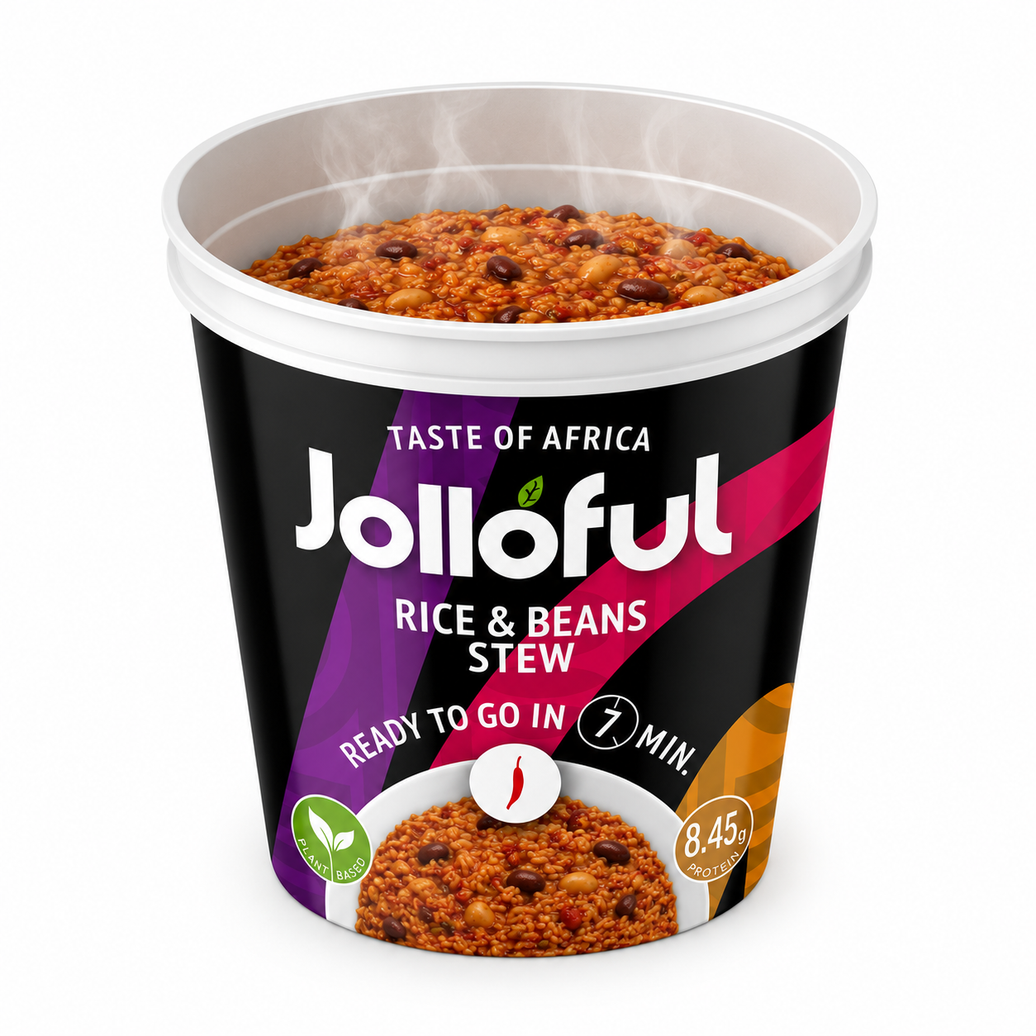
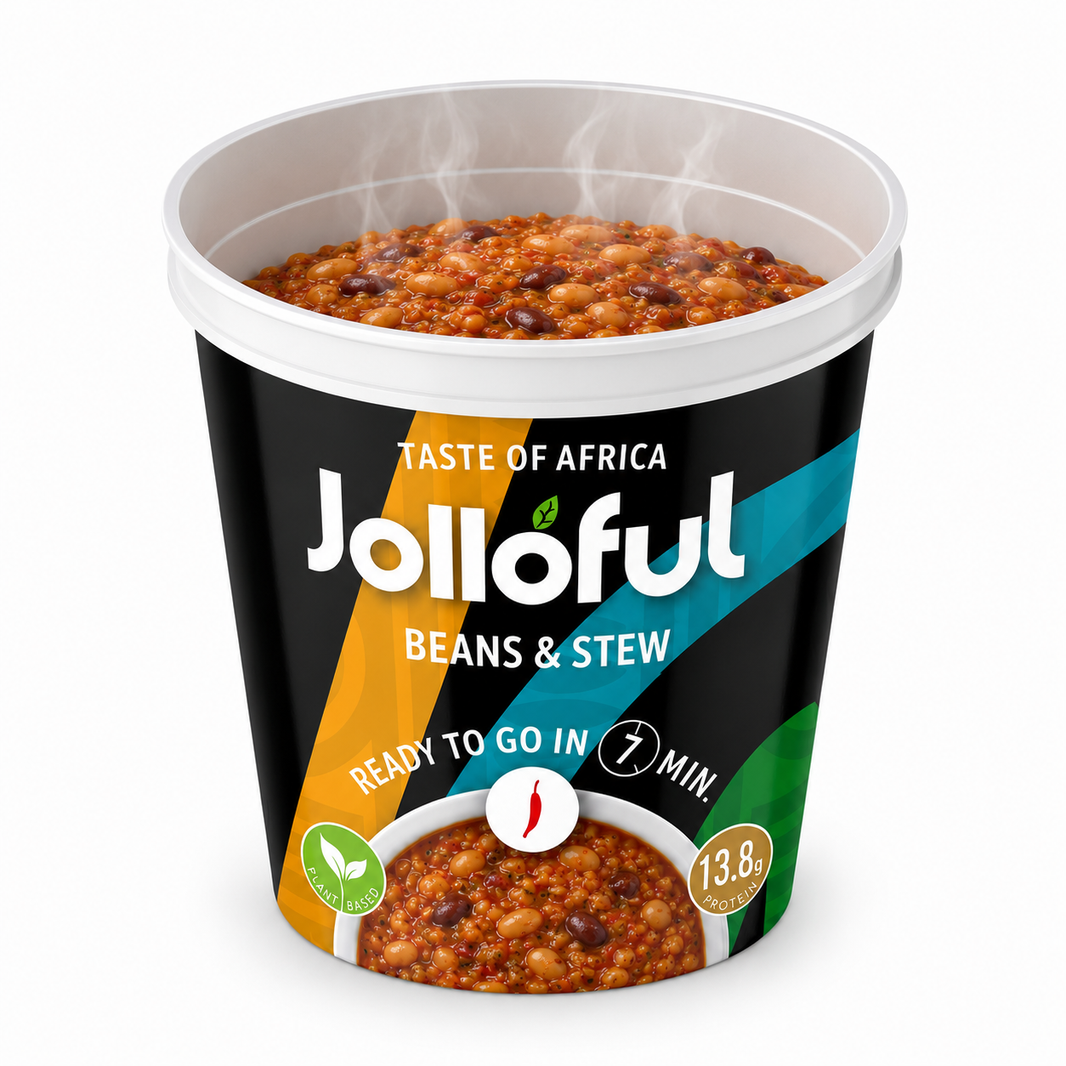
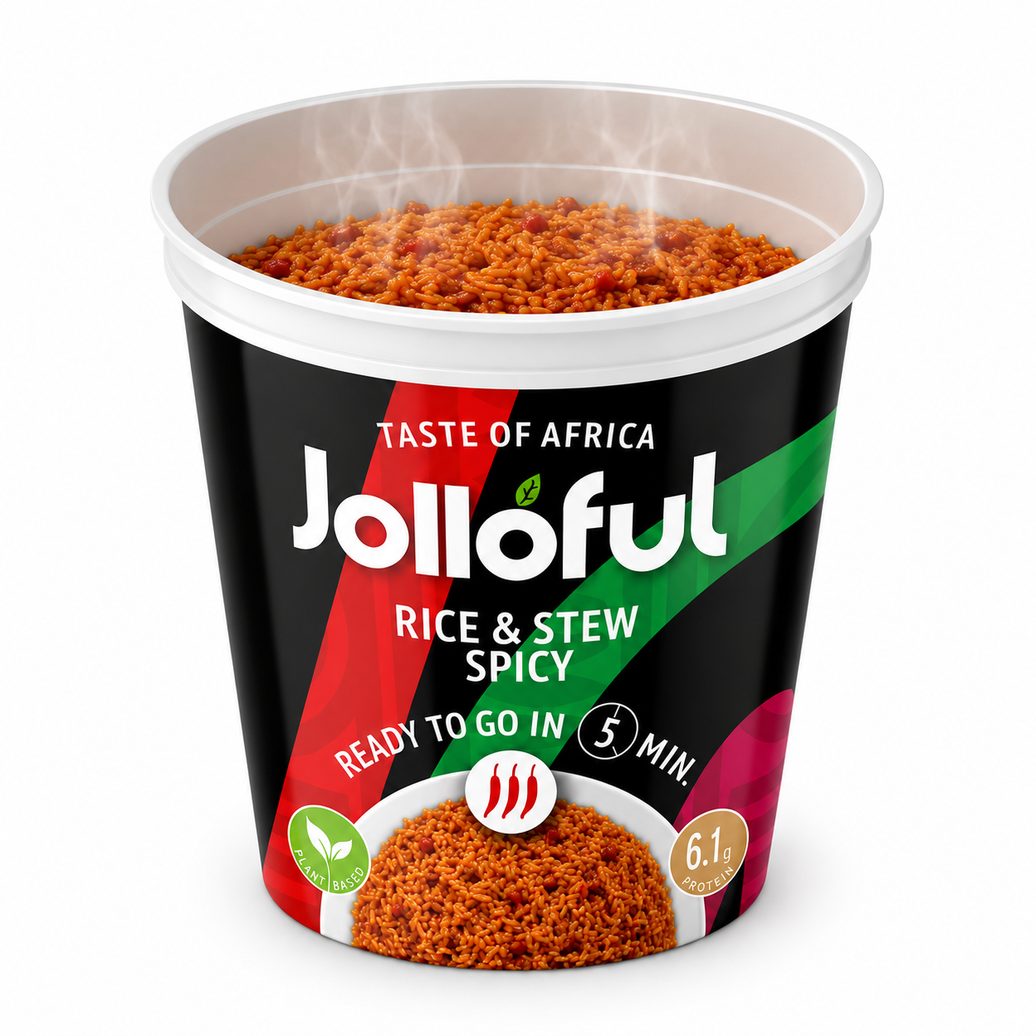
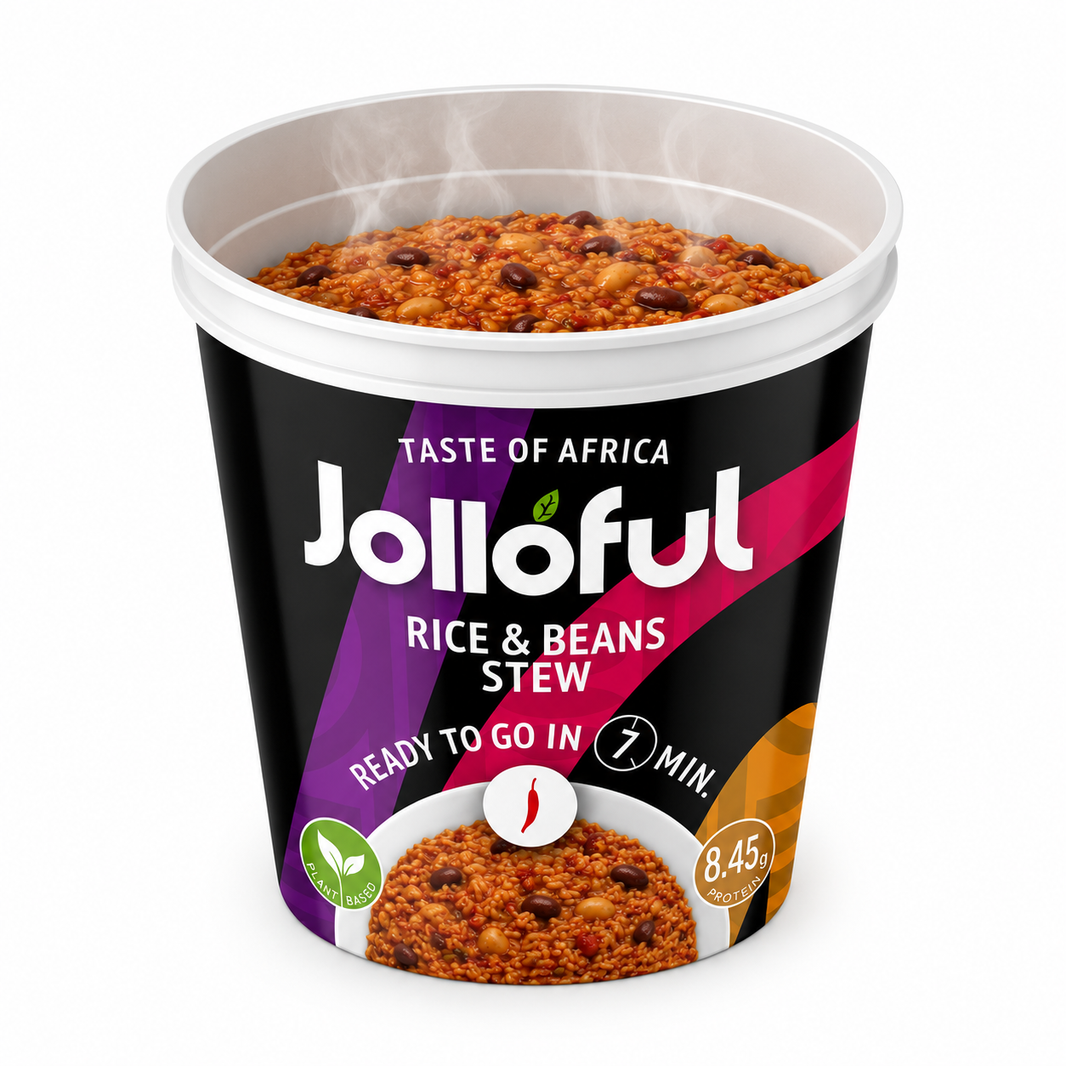
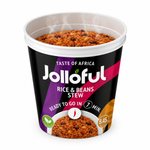
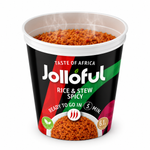
Jolloful brings West African flavor to desk lunches with packaged, ready-to-eat meals designed for quick preparation. Choose White Rice and stew (Mild), White Rice, beans and stew, Beans and stew, or White Rice and Stew (Spicy). These familiar combinations offer a practical option when you want a filling meal without cooking at work.
For a warm lunch with West African flavor, take a fork and follow the package directions. Choose the combination of rice, beans, and mild or spicy stew that suits your appetite and preferred heat.
If you’d like to learn more about which meal suits your workday, contact Jolloful.
Make your next work lunch easier
Let your calendar shape your lunch plan. A day of back-to-back meetings may call for food that’s ready to eat, while a quieter afternoon may leave time for a warm meal. Choose a format that fits the break you actually have, not the one you hope to find.
Keep a short list of meals you enjoy, then rotate flavors to make weekday lunches feel less routine. If West African home cooking brings the comfort you want at your desk, Jolloful offers a convenient way to bring those flavors into your workday. Choose based on both your appetite and the time available.
For quick desk lunch ready meals, start with the option that best fits your work setup and lunch break. Small, practical choices can make a busy day feel more considered.
A good lunch can offer a welcome pause in the middle of a full day. Make room for one you’ll look forward to.
Frequently Asked Questions
What Makes a Lunch “Desk-Friendly”?
A desk-friendly lunch is easy to handle without spreading across your workspace. Choose a secure container, food that stays together on a fork, and a portion that fits your break. For example, a rice bowl with thick stew is easier to manage than runny soup beside a keyboard. Pack napkins and cutlery, and keep strongly scented foods in a sealed container if you share an office.
Which ready meals need only a microwave, and which can be eaten cold?
Follow the package directions: chilled bowls may need a microwave, while salads and wraps can be eaten cold. Jolloful’s freeze-dried meal cups need hot water and stirring, not a microwave, and are ready in 5-7 minutes. Options include White Rice and stew (Mild), White Rice, beans and stew, and Beans and stew. The cups are shelf-stable for up to 12 months, making them handy to keep at work.


Hinterlasse einen Kommentar