
How to Adjust a Rice Spice Blend: Spicy Rice vs Mild. Mild rice doesn’t have to be bland. Leave out cayenne and skip chilli flakes at the end to reduce the heat while keeping aromatic spices for flavour.
If you enjoy fragrant rice but prefer gentler warmth, you can keep the depth without the chilli burn. Cumin, coriander, cardamom and turmeric add aroma and flavour. Adjust the balance to suit your table.
Learn how to adjust a spice blend, when to add each ingredient and how to taste as you cook. These simple steps help you make rice that suits your meal, from warmly spiced to mild and aromatic.
Which spices and ingredients are used in spicy rice versus mild rice?
The main difference between spicy and mild rice is the chilli heat. Cumin, coriander, cardamom and turmeric add aroma and depth without the same burning sensation.
Spicy Rice vs. Mild: Separate Heat from Aroma
Adjust the cayenne and chilli flakes to control the heat. Keep aromatic spices for flavour and character.
-
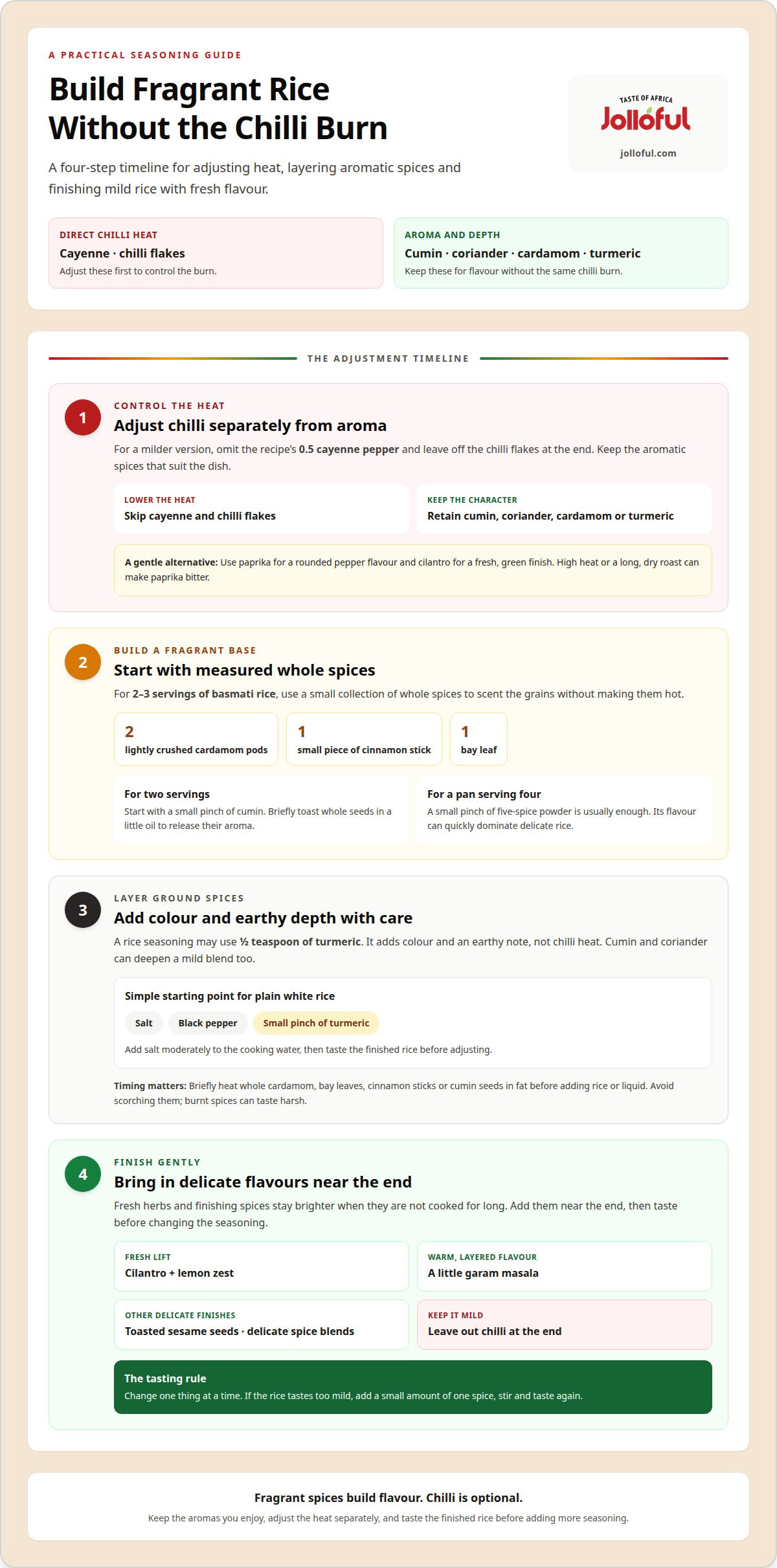
Choose the heat separately from the aroma. Cayenne and chilli flakes add direct heat, so they’re the first ingredients to adjust. Cumin, coriander, cardamom and turmeric create earthy, warm or floral notes without the same chilli burn.
For a milder version of a spicy rice recipe, omit its 0.5 cayenne pepper and don’t add chilli flakes at the end. Keep aromatic ingredients that suit the dish. This simple change helps preserve a lively, seasoned flavour while reducing the sharp heat.
For a gentler alternative, skip chilli and use paprika and cilantro. Paprika adds a rounded pepper flavour, while cilantro brings a fresh, green finish. Use paprika carefully: high heat or a long, dry roast can make it bitter.
-
Build a mild base with measured whole spices. For two to three servings of basmati rice, use two lightly crushed cardamom pods, a small piece of cinnamon stick and one bay leaf. These whole spices scent the rice as it cooks without making it hot.
Start with a small pinch of cumin for two servings. Whole cumin seeds release more aroma when briefly toasted in a little oil. Add them at the start, then stir in the rice so the grains pick up the fragrant fat.
For a pan serving four, a small pinch of five-spice powder is usually enough. Its flavour can quickly dominate delicate rice, so start with a little. Taste the cooked rice before adding more seasoning.
-
Use ground spices with care. A recipe may use 1/2 teaspoon of turmeric in its rice seasoning. Turmeric adds colour and an earthy note, not chilli heat. Cumin and coriander can also deepen a mild blend without turning it fiery.
For plain white rice, salt, black pepper and a small pinch of turmeric make a reliable starting point. Add salt moderately to the cooking water, then taste the finished rice. This gives you a chance to adjust the seasoning without making the whole pot too salty.
Add whole spices early in cooking. Briefly heat cardamom, bay leaves, cinnamon sticks or cumin seeds in fat before adding rice or liquid. Avoid scorching them, as burnt spices can taste harsh.
-
Finish with delicate flavours, not extra heat. Add fresh herbs, lemon zest, garam masala, toasted sesame seeds or delicate spice blends near the end. Their aromas stay brighter when they aren’t cooked for long.
For example, finish mild rice with cilantro and lemon zest for a fresh lift. Use a little garam masala for a warmer, more layered flavour. These additions boost the aroma, while leaving out cayenne and chilli flakes keeps the heat lower.
Make changes one at a time. If the rice tastes too mild, add a small amount of one spice, stir and taste again. To keep it gentle, leave out chilli at the end. A fragrant blend can feel complete without a burning kick.
To make rice milder, skip the chilli and use paprika and cilantro instead. This keeps a peppery character and fresh finish without the direct burn of chilli. Use paprika carefully, since high heat or a long, dry roast can make it bitter. Add cilantro just before serving so its fresh flavour remains.
Seasoning can change a dish’s character without making it hotter. Cumin and coriander add earthy depth, while cardamom and cinnamon lend warm, fragrant notes. Turmeric contributes colour and an earthy flavour, not chilli heat. Use these aromatic spices to shape the rice, and reserve chilli flakes or cayenne for diners who want more heat. Taste the finished rice before adjusting it, adding only what is needed to balance the aromas. This keeps a mild dish expressive, rather than relying on heat alone for flavour. A mild blend can still taste well seasoned when you choose fragrant spices and use them with restraint.
What foods and dishes pair well with spicy or mild rice?
-
Match the rice’s heat with a contrasting side. Spicy rice pairs well with cooling, crisp or creamy foods. Try cucumber salad, sliced tomato, plain yoghurt or mild cabbage slaw. Their fresh textures contrast with chilli warmth, while yoghurt adds a smooth note to the plate.
For mild rice, choose sides with stronger savoury flavours. Grilled vegetables, peppered mushrooms or a boldly seasoned stew can add depth. Keep the rice gentle, then let each person add their preferred sauce or condiment. This makes one pot work for different tastes at the table.
Build the plate with a clear balance: rice, one main dish and one fresh side. For example, serve spicy rice with grilled chicken and cucumber salad. Pair mild rice with roasted aubergine and a rich tomato stew.
-
Choose a protein that suits the seasoning. Grilled chicken, baked fish and seared tofu bring savoury flavour alongside either rice style. With spicy rice, a simply seasoned protein can keep the plate from becoming too intense. Lemon or fresh herbs add brightness without more chilli.
Mild rice leaves room for a more deeply seasoned main. Try it with peppered chicken, pan-fried fish or beans cooked with onion and tomato. The rice takes in the dish’s juices and balances its stronger flavours. For a plant-based plate, pair beans and rice with a crisp vegetable side.
In African home cooking, rice, stew and protein make a familiar, flexible meal. Consider the stew’s heat: a fiery sauce can make mild rice taste much hotter overall. Serve extra sauce separately so each person can choose how much to add.
-
Use stew and sauce to set the overall heat. A mild tomato stew complements either rice style, especially when it includes onion, garlic and herbs. Spoon it beside the rice first rather than mixing everything at once. This keeps the grains distinct and lets diners control each mouthful.
With spicy rice, pair the grains with a gentle stew rather than another hot sauce. If the rice is mild, a pepper-forward stew can provide the heat instead. Nigerian-style pepper stew, for example, offers a bolder contrast. Keep the rice and stew separate until serving so diners can choose their balance.
At a shared meal, put chopped herbs, lemon wedges and sauce in small bowls. Guests can add them to their own plates. This simple step lets one meal suit different preferences without changing the main pot.
-
Finish the plate with fresh texture and a useful contrast. Add cucumber, lettuce, tomato or lightly dressed cabbage for crunch alongside soft rice. Roasted plantain brings a sweet, caramelised edge that works with savoury stew. Fried or roasted vegetables also add colour and texture to a simple rice plate.
For a gentler meal, serve mild rice with beans and fresh salad. For a bolder plate, pair spicy rice with grilled vegetables and a cooling yoghurt dip. A little of each side adds contrast without crowding the plate.
Keep the combination practical: choose one main, one sauce and one fresh or crisp side. If a ready-made African meal suits your table, browse the African meal selection for options to pair with your favourite sides.
Are spicy rice dishes safe for children or people with sensitive stomachs?
Chilli heat can feel uncomfortable, especially for children and people with sensitive stomachs. Choose a mild serving if heat causes discomfort, and keep spicy sauce separate so each person can control their plate.
-
Start with a mild portion for children. Serve rice without added chilli, keeping any spicy sauce separate. This lets a child try the aroma and other flavours without committing to a hot mouthful. A mild plate can still include savoury stew, vegetables or grilled protein.
Children vary in how much chilli they enjoy, so one family member’s preference may not suit everyone. Offer a small taste first and let the child decide whether to continue. Avoid making the meal hotter at the table to match an adult’s serving.
-
Choose less heat if chilli tends to upset your stomach. Skip chilli-heavy toppings and choose rice with gentler seasoning. Keep the serving simple, with familiar foods such as plain rice, vegetables or mild stew. A very spicy sauce can add heat even when the rice itself tastes mild.
The Federal Institute for Risk Assessment (BfR) says eating very spicy foods can increase the risk of damage to the stomach lining, even at levels reached through traditional consumption. This is a reason to treat strong chilli heat carefully, rather than assuming a familiar dish is automatically gentle.
-
Keep a cooling side ready for chilli discomfort. Yoghurt, raita or bread can help when chilli heat feels uncomfortable. Raita is a yoghurt-based side, often served with herbs or vegetables. A spoonful alongside spicy rice adds a cool, creamy contrast.
Yoghurt-based drinks such as lassi can also help cool spicy food because dairy binds to capsaicin, the compound responsible for chilli heat. Water offers little relief from the burning sensation. Serve a cooling side with the meal rather than relying on water alone after discomfort begins.
-
Adjust the whole plate, not just the rice. Heat builds across a meal when chilli appears in the rice, stew and sauce. For example, pair mildly seasoned rice with hot pepper sauce served separately. This lets each diner control the final heat.
If someone has a sensitive stomach, avoid combining several spicy elements. Choose a mild stew and a plain side, then serve chilli separately for other diners. Rice, vegetables and a gently seasoned protein can still make a complete meal without a hot finish.
-
Pay attention to how the meal feels. If chilli causes discomfort, stop adding heat and switch to a milder portion. A yoghurt-based side or bread may ease the mouth’s burning sensation, while water offers little relief. Keep the next serving gentler rather than trying to mask strong heat with more sauce.
For a shared dinner, serve mild and spicy elements in separate bowls. Children and guests with sensitive stomachs can choose a gentler plate, while others add chilli to taste. This small choice makes one meal more flexible without changing the whole pot.
If chilli causes discomfort, pause and keep the rest of the meal gentle. Indian food varies in heat by dish, region and cook, and many Indian dishes are mild. The cuisine isn’t uniformly hot: the preparation matters, and a mild choice can suit someone who wants flavour without intense chilli. If you’re unsure how a dish is seasoned, ask about its heat before serving, or keep the chilli accompaniment separate. A small taste lets diners decide whether to add more while keeping the rest of the plate comfortable. People respond differently, so use discomfort as a cue to choose less heat next time.
The spicy rice recipe serves 4 people. When sharing it, make the serving flexible rather than assuming everyone wants the same level of chilli. Put the rice on the table with hotter additions separate, and let each person season their own portion. A child or sensitive diner can then begin with the rice and mild accompaniments, while another person can add more heat if wanted. Keeping the components apart also makes it easier to stop at a comfortable level without changing the whole dish. If a serving already feels too hot, set aside the chilli-rich part and continue with gentler foods. The aim is to make the heat optional so the meal can be enjoyed at an intensity that feels manageable.
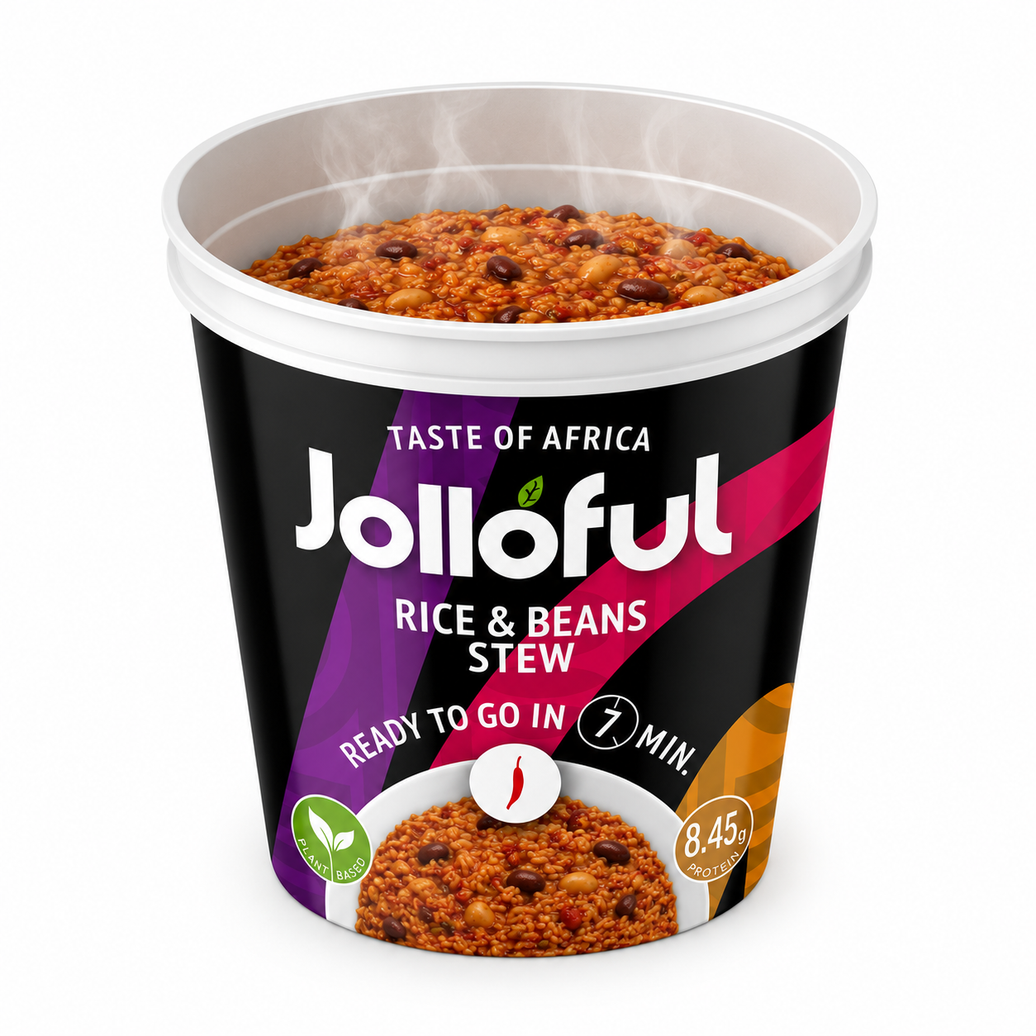
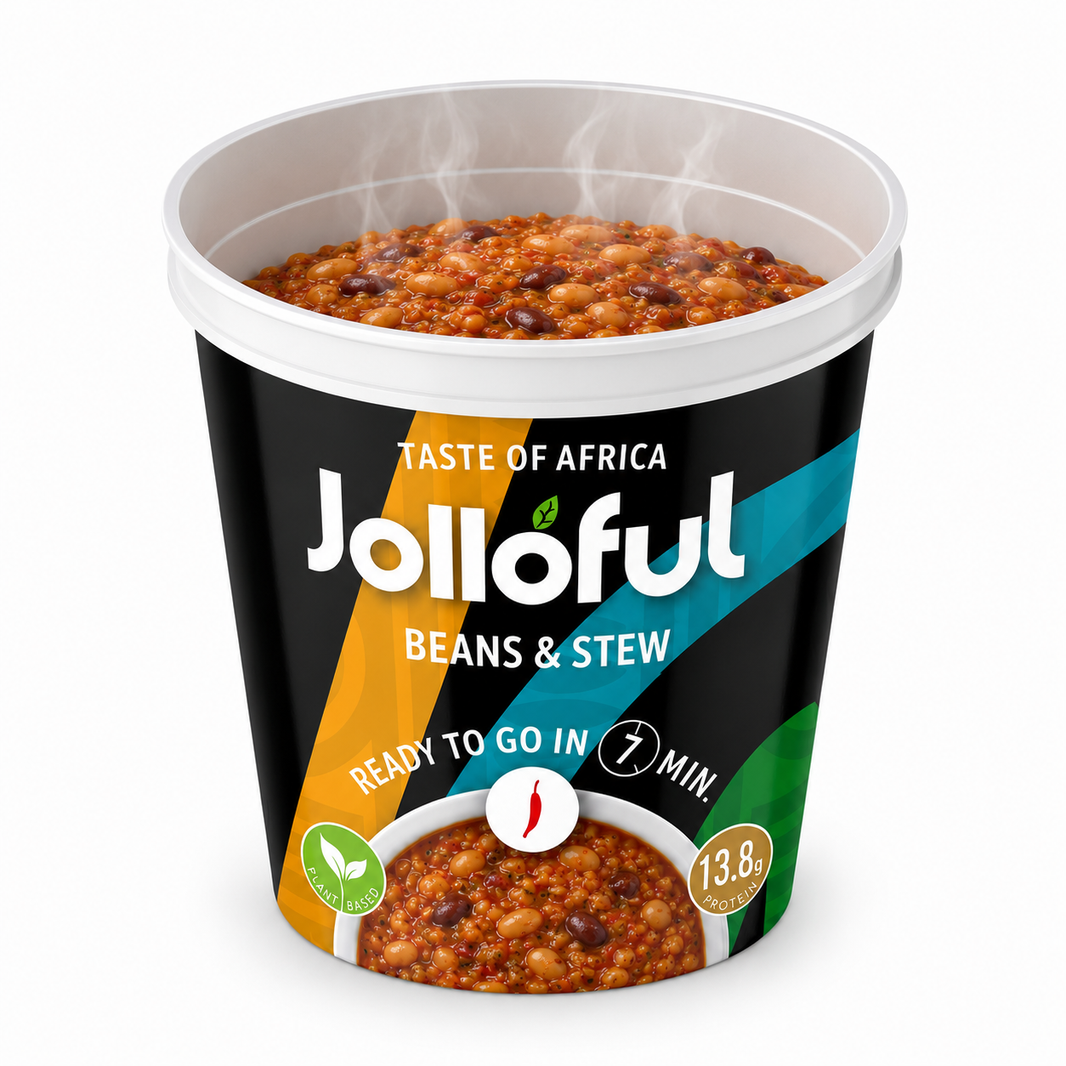
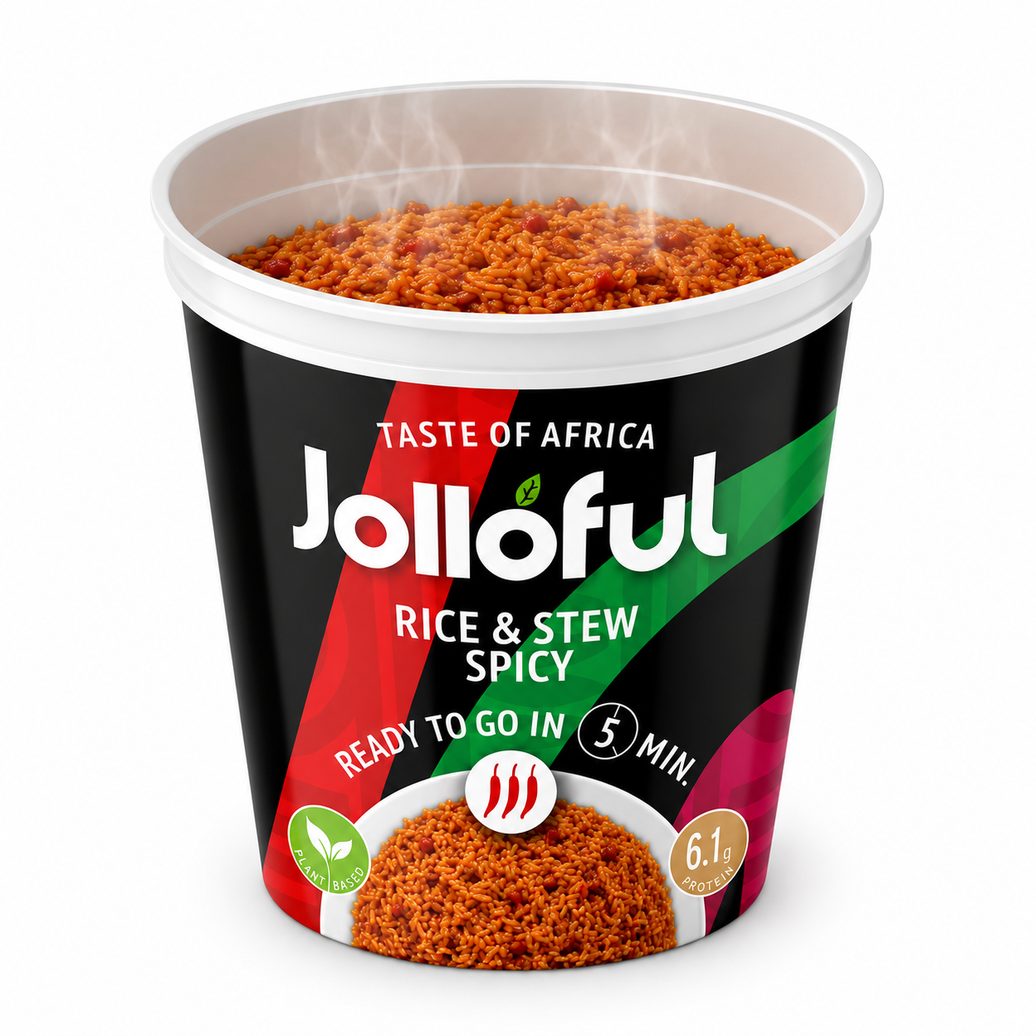
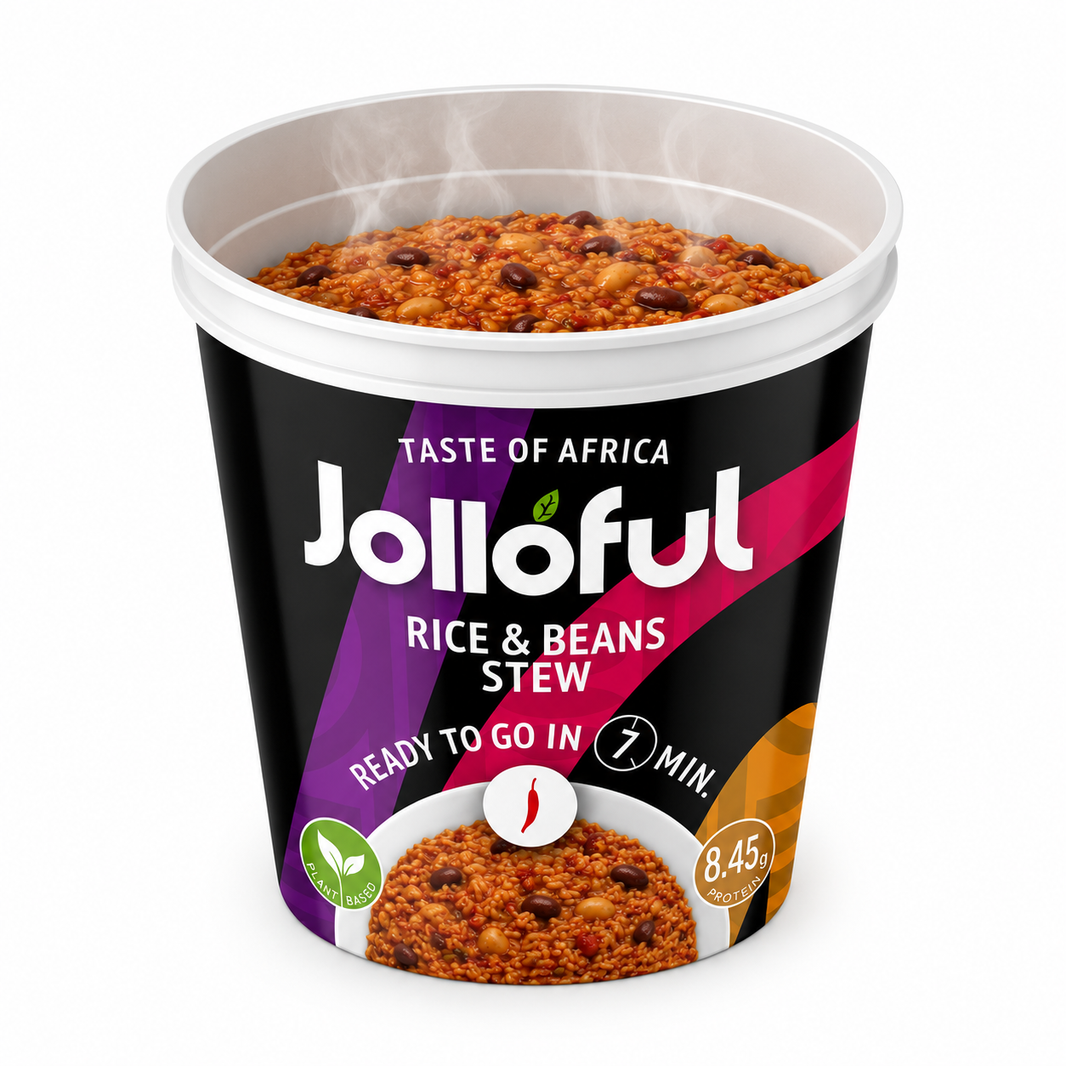
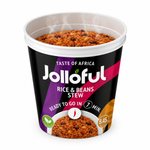
Jolloful: White Rice and stew (Mild)
Jolloful’s White Rice and stew (Mild) offers a gentler choice when you want a seasoned rice meal without the spicy option. It works well for a shared table where some diners prefer less heat, or for a meal where you’d like to add your own sides.
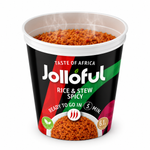
Jolloful also offers White Rice, beans and stew, Beans and stew, and White Rice and Stew (Spicy). Choose White Rice and stew (Mild) when you want less heat, or the spicy version when you prefer more chilli warmth.
For a ready-to-eat African meal at home, explore Jolloful’s meal selection. Contact Jolloful if you’d like to ask about its rice and stew offerings.
Make your next rice meal your own
Let the people at your table guide the choice. A meal can be fragrant and full of character without being fiery, while a spicier plate can suit diners who enjoy more heat. The right balance is one everyone enjoys.
For an easy meal, Jolloful offers White Rice and stew (Mild), White Rice, beans and stew, and Beans and stew. Each brings a different rice-and-stew combination to the table. Choose the style that suits your plans, then add sides to make the meal your own.
Thinking through spicy rice vs. mild rice can help you choose a plate that suits your taste and the occasion. If you’d like help deciding which Jolloful meal fits, contact Jolloful.
Bring your favourite flavours together and enjoy making the meal your own.
Frequently Asked Questions
What is the difference between spicy rice and mild rice?
Spicy rice has noticeable chilli heat, while mild rice has little or no chilli warmth. The difference is heat, not how richly seasoned the rice tastes. Rice scented with cardamom and cinnamon, for example, can be aromatic yet mild. Chilli brings a sharper sensation, while spices such as coriander add flavour without the same burn. This distinction helps you choose seasoning to suit the meal.
How can you make mild rice spicier?
Mix a little ground cayenne or chilli powder into warm oil, then fold the seasoned oil through cooked rice. The fat helps distribute the chilli flavour across the grains. For a fresher, sharper kick, finely chop fresh chilli and stir it into the rice near the end of cooking. Choose the method for the flavour you want: warm and rounded from cayenne, or bright and direct from fresh chilli.


Hinterlasse einen Kommentar